
Mining Ship Progression
“The best mining ship isn’t the biggest one—it’s the one your skills can use effectively.”
Mining barges are the backbone of industrial operations in New Eden. Choosing the right ship at the right time will maximise your income while keeping you alive to mine another day.
This guide explains the progression from your first mining frigate to the pinnacle of subcapital mining ships, and when you should make each upgrade.
The LSE Progression Path
We recommend the following progression for most new miners:
Venture → Retriever → Mackinaw → Hulk (Optional Specialist)
This route provides a balance of income, survivability and affordability while building the skills you’ll use throughout your mining career.
Stage 1 – Venture
Purpose
Learn the fundamentals of mining while building your initial wallet.
Why the Venture?
The Venture is given early in the game and is one of the most forgiving mining ships.
Advantages:
- Very inexpensive
- Excellent warp core strength
- Fast to train
- Easy to replace
- Ideal for learning fleet operations
Focus on learning:
- Mining mechanics
- Fleet etiquette
- Ore compression
- Survey scanners
- Bookmarking
- Staying alert
Recommended Skills
- Mining IV
- Astrogeology III–IV
- Mining Frigate IV
- Shield Operation
- Shield Management
- Navigation
- Drones III–V
Upgrade When…
You can comfortably replace your Venture several times and have the skills to begin training into a Mining Barge.

Stage 2 – Pioneer
Purpose
Take your first step beyond the Venture while learning the fundamentals of barge-sized mining operations.
The Pioneer bridges the gap between the Venture and the Mining Barges, offering improved mining performance while remaining relatively inexpensive and accessible to newer pilots.
Advantages
- Noticeably higher yield than the Venture
- Affordable entry into larger mining ships
- Good introduction to strip mining mechanics
- Excellent stepping stone towards Mining Barges
- Ideal for pilots beginning regular fleet operations
Ideal For
- Pilots graduating from the Venture
- High-sec belt and moon mining
- Learning fleet positioning
- Building ISK towards a Retriever
Skills to Train
- Mining IV
- Astrogeology IV
- Mining Upgrades III–IV
- Shield Management
- Shield Operation
- Navigation
- Drones IV–V
What to Learn
Use the Pioneer to become comfortable with:
- Mining fleet procedures
- Managing longer mining cycles
- Proper positioning around asteroids
- Staying aligned
- Working alongside Orca boosts
Upgrade When…
You are comfortably earning enough ISK to replace your ship, have trained into Mining Barge, and regularly participate in corporation mining fleets.
Stage 3 – Retriever
Purpose
Increase your income while maintaining simplicity.
The Retriever is often the best first Mining Barge for new pilots.
Advantages:
- Large ore hold
- Relaxed mining
- Low management
- Affordable compared to Exhumers
Ideal for:
- New fleet miners
- Moon mining
- Long mining cycles
- Players still learning
Skills to Train
- Mining Barge IV
- Mining Upgrades IV
- Astrogeology V
- Mining Laser Upgrades
- Drones V
- Light Drone Operation
What to Learn
This is the perfect stage to practise:
- Crystal management
- Tank fitting
- Fleet positioning
- Aligning while mining
- Working with Orca boosts
Upgrade When…
You consistently fill your ore hold, regularly participate in LSE fleets and can comfortably afford both the next ship and its replacement.
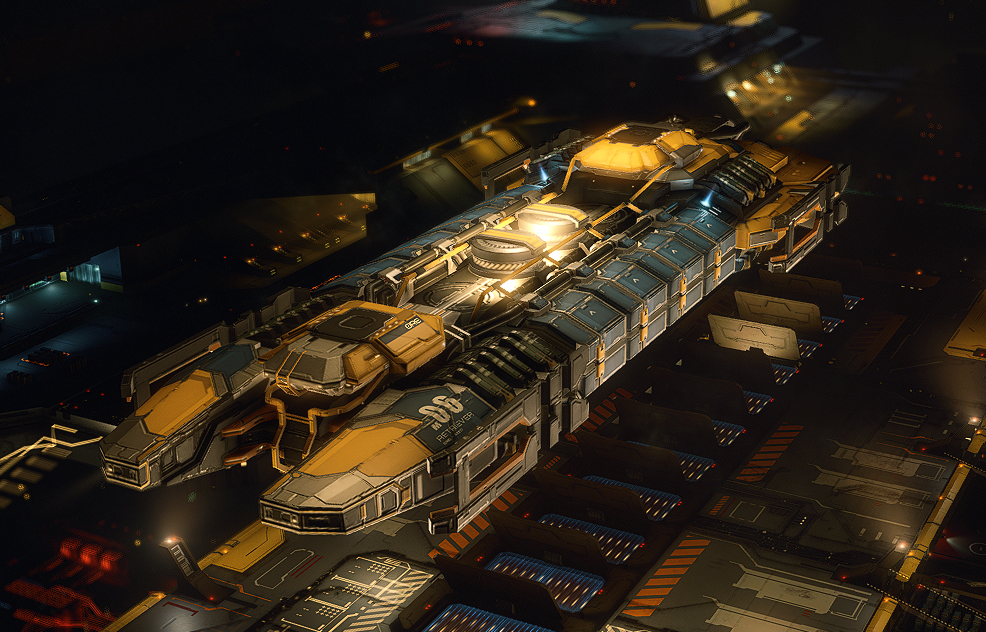
Stage 4 – Mackinaw
Purpose
The Mackinaw is the workhorse of Last Stand Enterprises.
For most members, this will become your primary mining ship.
Advantages:
- Excellent yield
- Massive ore hold
- Strong shield tank
- Comfortable for long fleets
- Forgiving if distracted briefly (though never mine AFK)
This ship perfectly suits LSE’s organised moon mining operations.
Essential Skills
Before flying one confidently, aim for:
- Mining Barge V
- Exhumers IV (eventually V)
- Astrogeology V
- Mining V
- Mining Upgrades IV–V
- Shield Management V
- Shield Operation V
- Tactical Shield Manipulation
- Drone Interfacing
- Mining Drone skills
Why LSE Recommends the Mackinaw
It offers an excellent balance between:
- Yield
- Survivability
- Cargo capacity
- Ease of use
For the majority of our operations, the Mackinaw is the ideal all-round miner.

Stage 5 – Hulk (Specialist)
Purpose
Maximum mining output.
The Hulk is the highest-yield mining ship in the game, but that performance comes with trade-offs.
Advantages:
- Highest mining yield
- Excellent with fleet boosts
- Ideal for experienced pilots
Disadvantages:
- Small ore hold
- Requires frequent unloading
- Less forgiving of mistakes
- Higher attention requirement
The Hulk rewards active pilots who enjoy squeezing every bit of efficiency from their time in space.
Choose a Hulk If…
- You mine almost exclusively in organised fleets.
- You enjoy active gameplay.
- You have reliable hauling support.
- You are comfortable managing crystals and cargo.
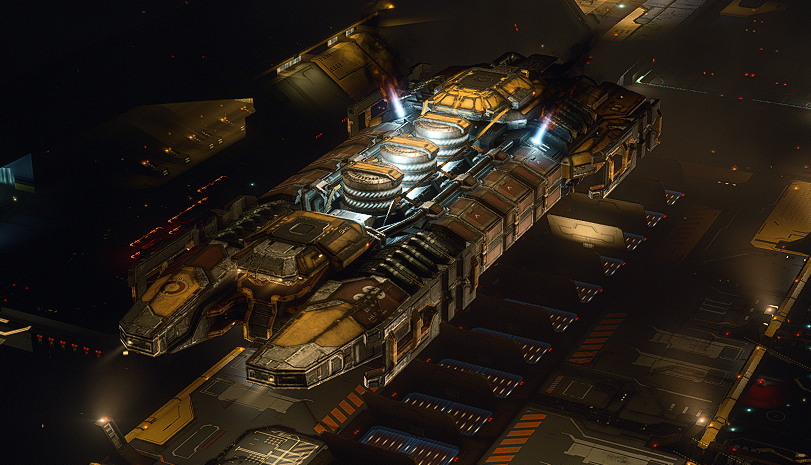
Fleet Support Path – Orca
Purpose
The Orca is not simply another mining ship—it is the backbone of an organised mining fleet.
Rather than focusing solely on personal yield, Orca pilots dramatically increase the productivity, survivability and efficiency of everyone around them.
Within Last Stand Enterprises, skilled Orca pilots are some of our most valuable members.
Advantages
- Powerful mining command bursts
- Fleet-wide shield bonuses
- Large fleet hangar and ore hold
- Compress ore in space
- Tractor beam and logistics support
- Excellent survivability
- Acts as the fleet’s central command ship
Ideal For
- Experienced industrial pilots
- Fleet commanders
- Dedicated support pilots
- Members who enjoy helping others maximise their income
Skills to Train
- Industrial Command Ships
- Mining Foreman
- Mining Director
- Mining Foreman Burst Specialist
- Leadership
- Shield Command
- Industrial Reconfiguration (if applicable)
- Command Burst skills
- Advanced drone skills
Responsibilities
An Orca pilot does far more than simply sit in space.
They are expected to:
- Keep command bursts active
- Provide compression services
- Maintain fleet positioning
- Offer a safe location for fleet members
- Coordinate hauling where required
- Assist newer pilots with advice and support
Train into an Orca When…
- You regularly attend LSE mining fleets.
- You enjoy supporting other pilots.
- You have strong mining and leadership skills.
- You’re looking to contribute to the corporation beyond your own mining yield.
While the Hulk produces the most ore individually, a well-flown Orca can increase the output of an entire fleet, making it one of the most impactful ships in New Eden.
Which Ship Should You Fly?
| Ship | Best For | Ease of Use | Yield | Ore Hold | Tank |
|---|---|---|---|---|---|
| Venture | Beginners | ★★★★★ | ★ | ★★ | ★★★ |
| Pioneer | New industrial pilots | ★★★★★ | ★★ | ★★★ | ★★★ |
| Retriever | First Mining Barge | ★★★★★ | ★★★ | ★★★★★ | ★★★ |
| Mackinaw | Everyday LSE mining | ★★★★☆ | ★★★★ | ★★★★★ | ★★★★ |
| Hulk | Maximum efficiency | ★★☆☆☆ | ★★★★★ | ★★ | ★★★ |
| Orca | Fleet support & boosting | ★★★★☆ | ★★* | ★★★★★ | ★★★★★ |
The Orca’s personal mining yield is modest, but its fleet boosts can increase the overall output of every miner in the fleet.
Don’t Rush the Hull
Many pilots buy an Exhumer as soon as they can sit in one.
This is usually a mistake.
A well-trained Retriever or Covetor can outperform a poorly-skilled Exhumer, while costing much less to replace.
Train your support skills before chasing the next hull.
LSE Best Practices
Within Last Stand Enterprises we recommend:
- Fly tanked fits rather than maximum-yield “glass cannon” fits.
- Join boosted mining fleets whenever possible.
- Use the correct mining crystals for the ore you’re extracting.
- Stay aligned when practical.
- Watch Local and your Overview for potential threats.
- Follow fleet positioning and mining rules.
- Sell ore through the LSE Ore Buyback programme if you want quick, reliable income.
Remember: a ship producing slightly less ore is far more profitable than one sitting in a wreck.
Common Mistakes
- Buying an Exhumer before training support skills.
- Prioritising yield over survivability.
- Flying ships you can’t afford to replace.
- Ignoring drone skills.
- Mining without fleet boosts when a fleet is available.
- Forgetting spare mining crystals.
- Mining while AFK.
Long-Term Goals
After mastering your chosen mining ship, consider expanding your role within the corporation by training into:
- An Orca to provide fleet boosts, compression and logistics support.
- Industrial hauling to support mining operations.
- Reprocessing to maximise refining efficiency.
- Manufacturing to turn ore into profitable products.
- Planetary Industry for additional passive income.
A versatile industrial pilot is one of the most valuable assets a corporation can have.
Final Thoughts
Every stage of your mining journey teaches valuable lessons. Don’t measure your progress solely by the size of your ship—measure it by your knowledge, your efficiency and your ability to contribute to the fleet.
At Last Stand Enterprises, our strongest miners aren’t simply those with the highest yield. They’re the pilots who stay prepared, work as a team and help others succeed.
Train patiently, upgrade wisely, and remember:
A skilled miner in the right ship will always outperform an impatient pilot in the biggest one.